LTX
Comparable motion passes from an approved still.
AI-generated game visual development · concept phase
Each study begins with a specific art-direction question. Stills establish composition, visual language, lighting, and subject continuity; reviewed video passes test camera, pacing, action, and continuation. This work is clearly separated from shipped-project imagery and presented as visual development, not final engine output.
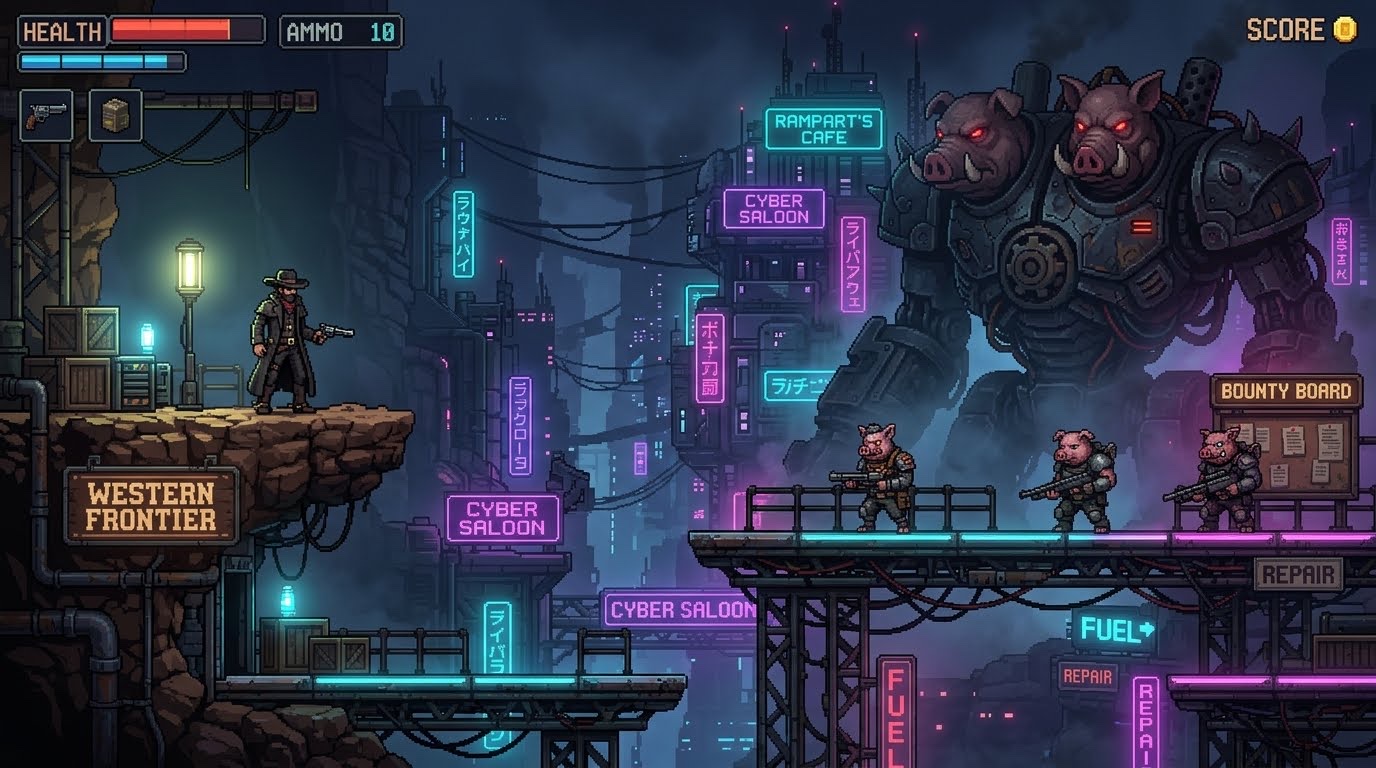
Cyber-western world study
This study tests how western silhouette language can carry futuristic utility without losing clarity. The approved keyframe establishes massing, combat lanes, material contrast, and restrained electric accents; the motion pass tests action cadence, enemy scale, projectile readability, and camera stability.
Mystery + stealth scene study
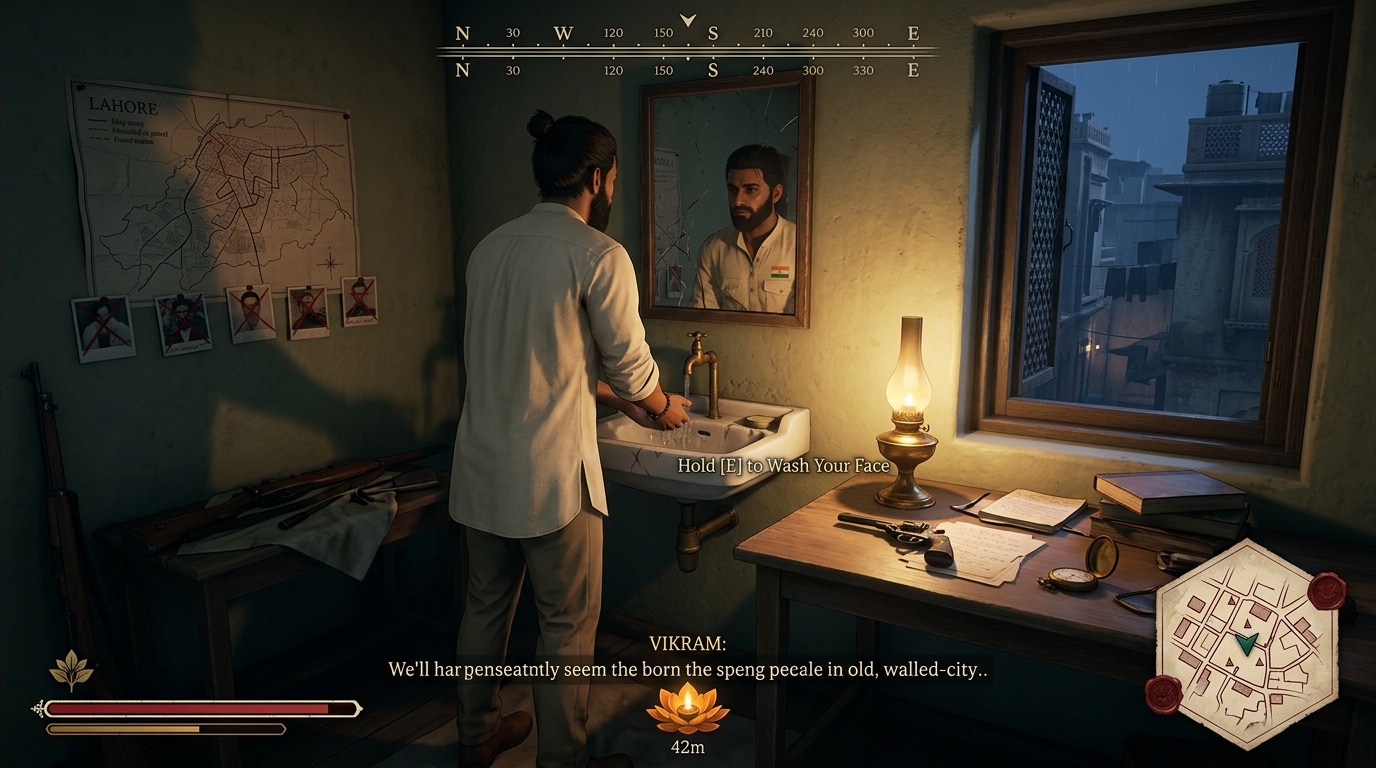
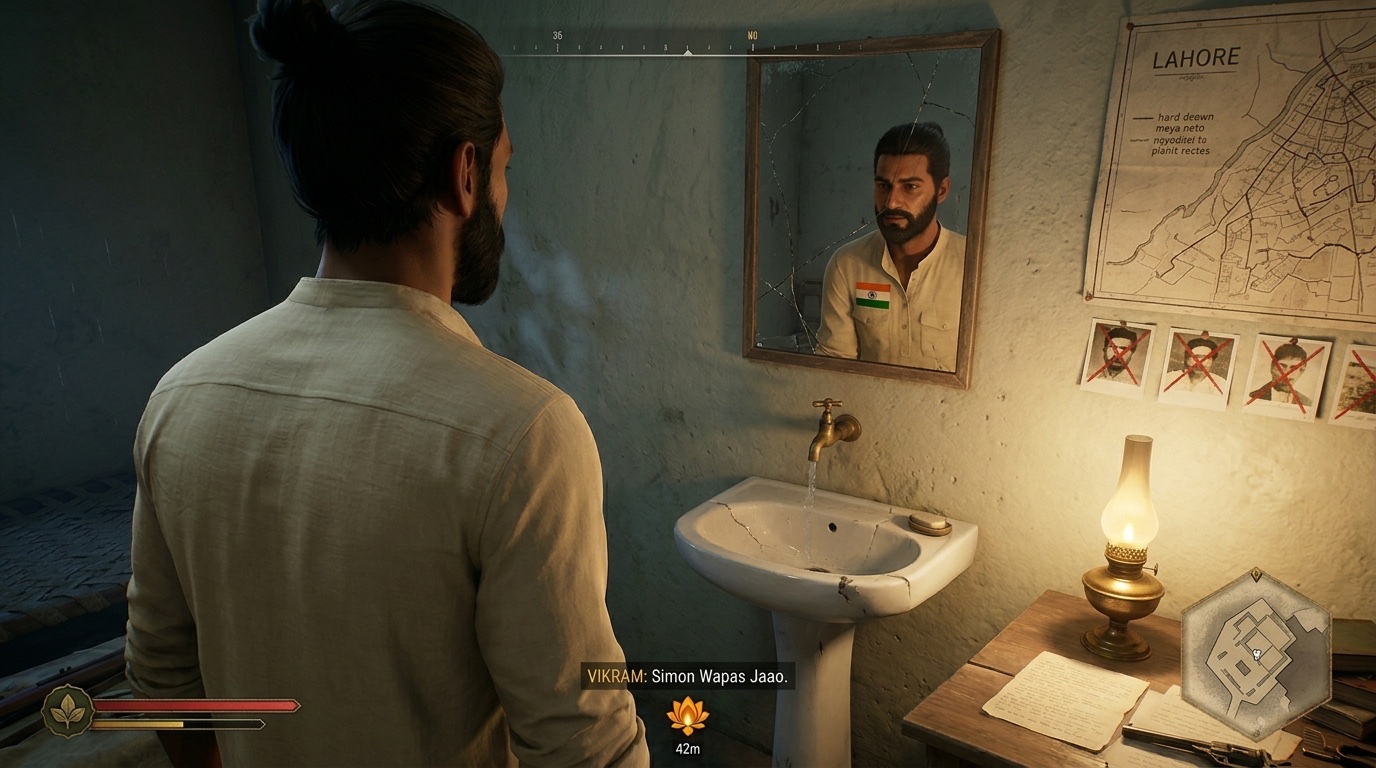
Layered thresholds, a rain-cooled exterior, and one warm practical turn the room into a reading problem: what can be observed, which detail deserves suspicion, and where should the player look next? The paired stills test establishing and investigation beats while preserving subject identity, lighting logic, and a consistent camera axis across the scene.
Past / present · character consistency
These concept-phase sheets compare historically inspired and contemporary character directions. The goal is continuity rather than documentary reconstruction: lock the recognizable anchors, then reject variations where silhouette, garment construction, proportions, or carried details no longer agree across views.
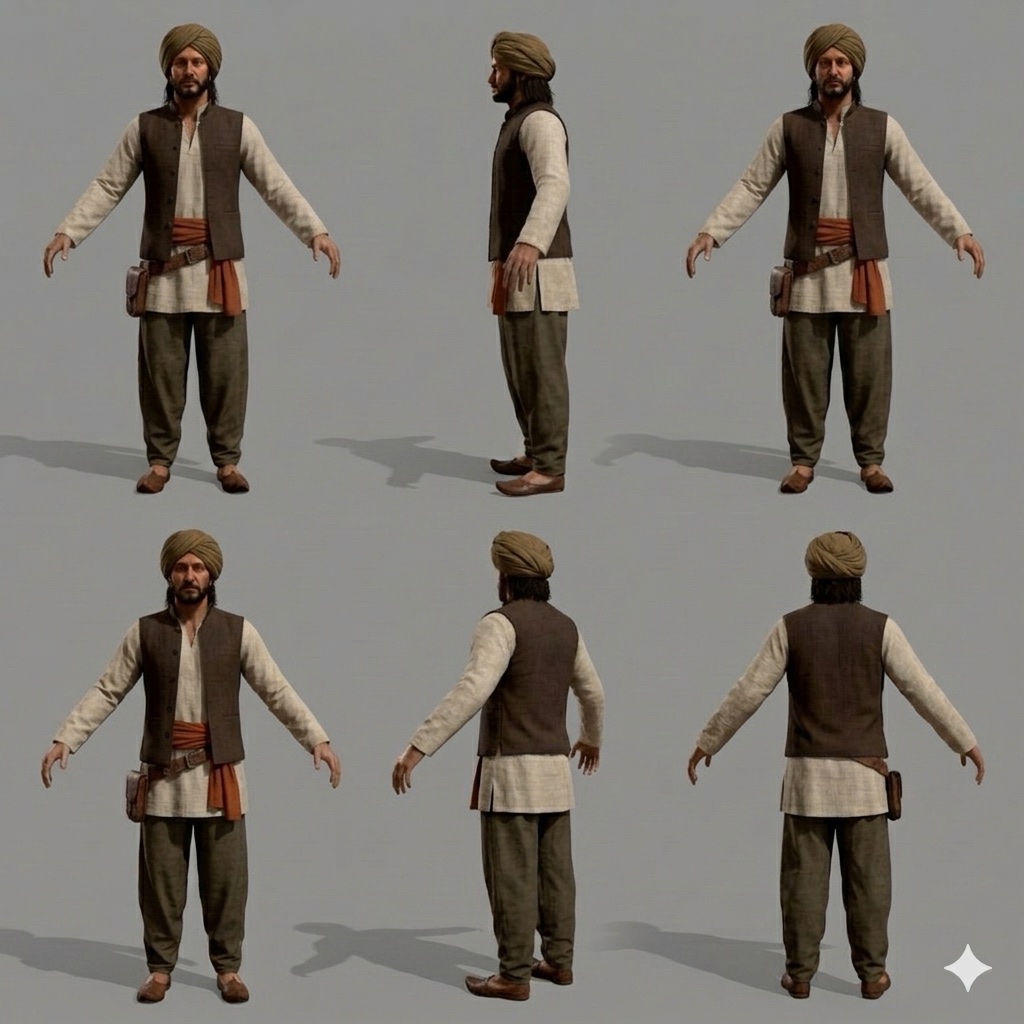
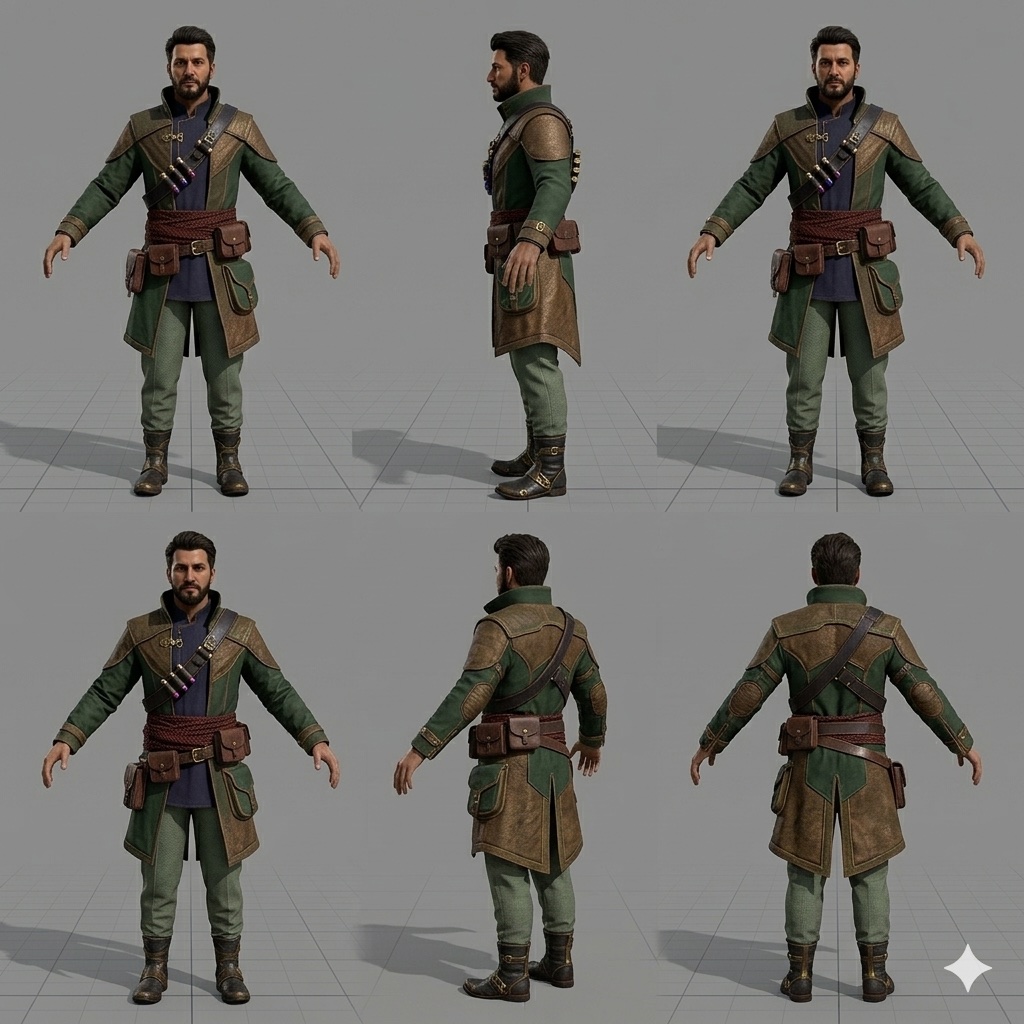
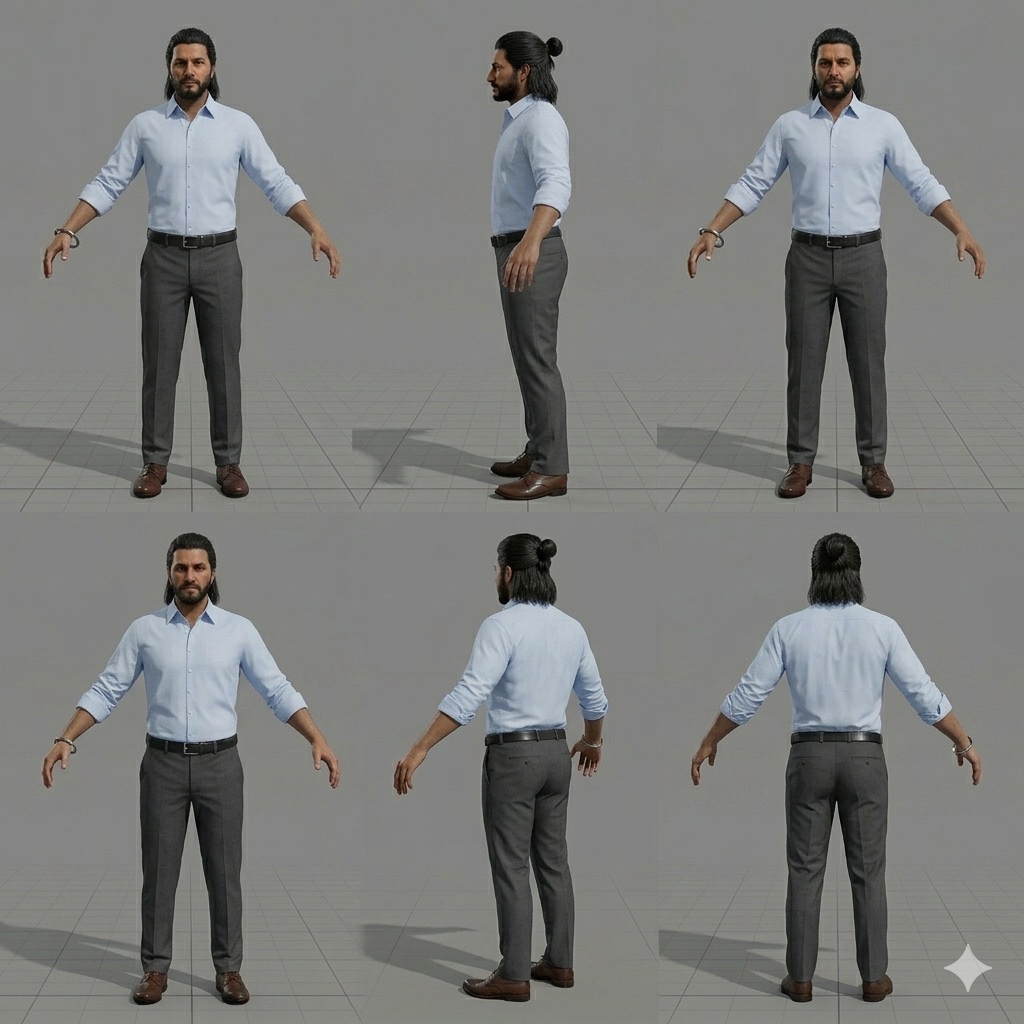
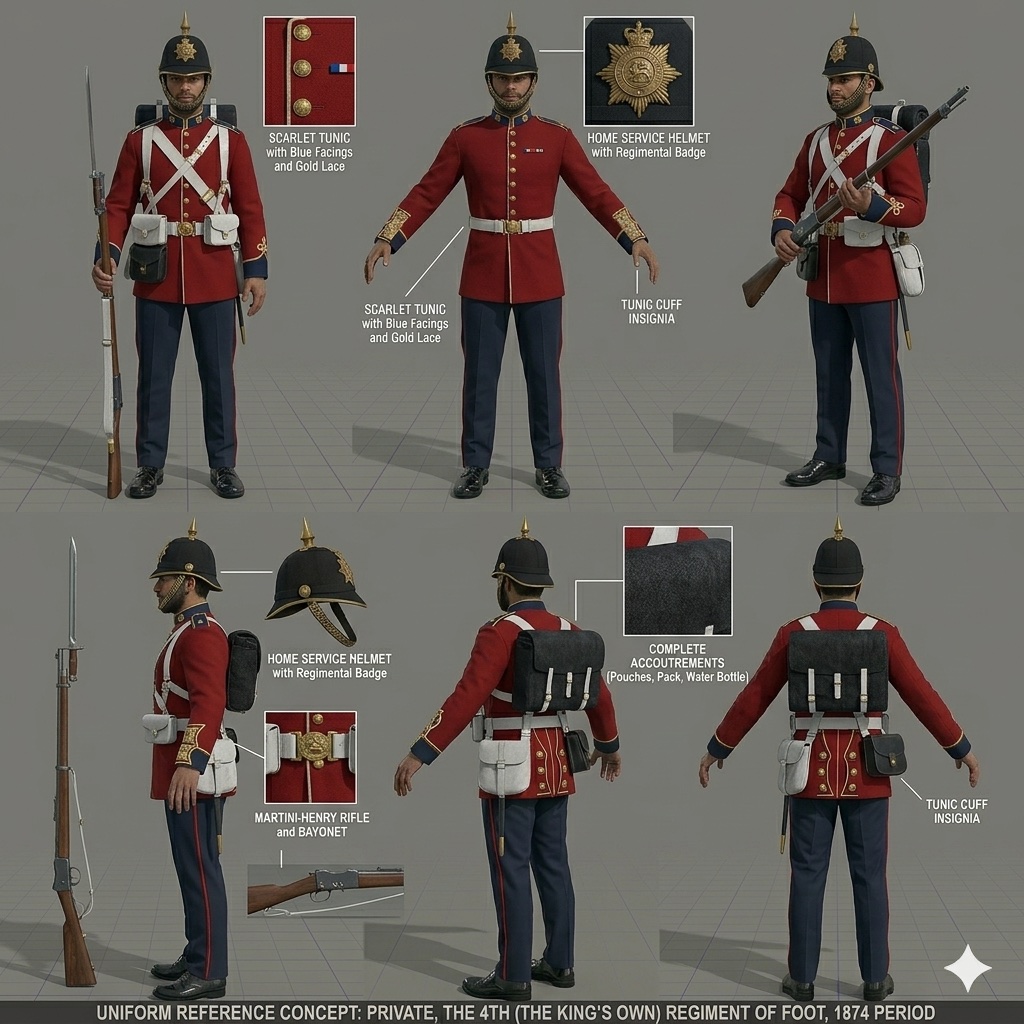
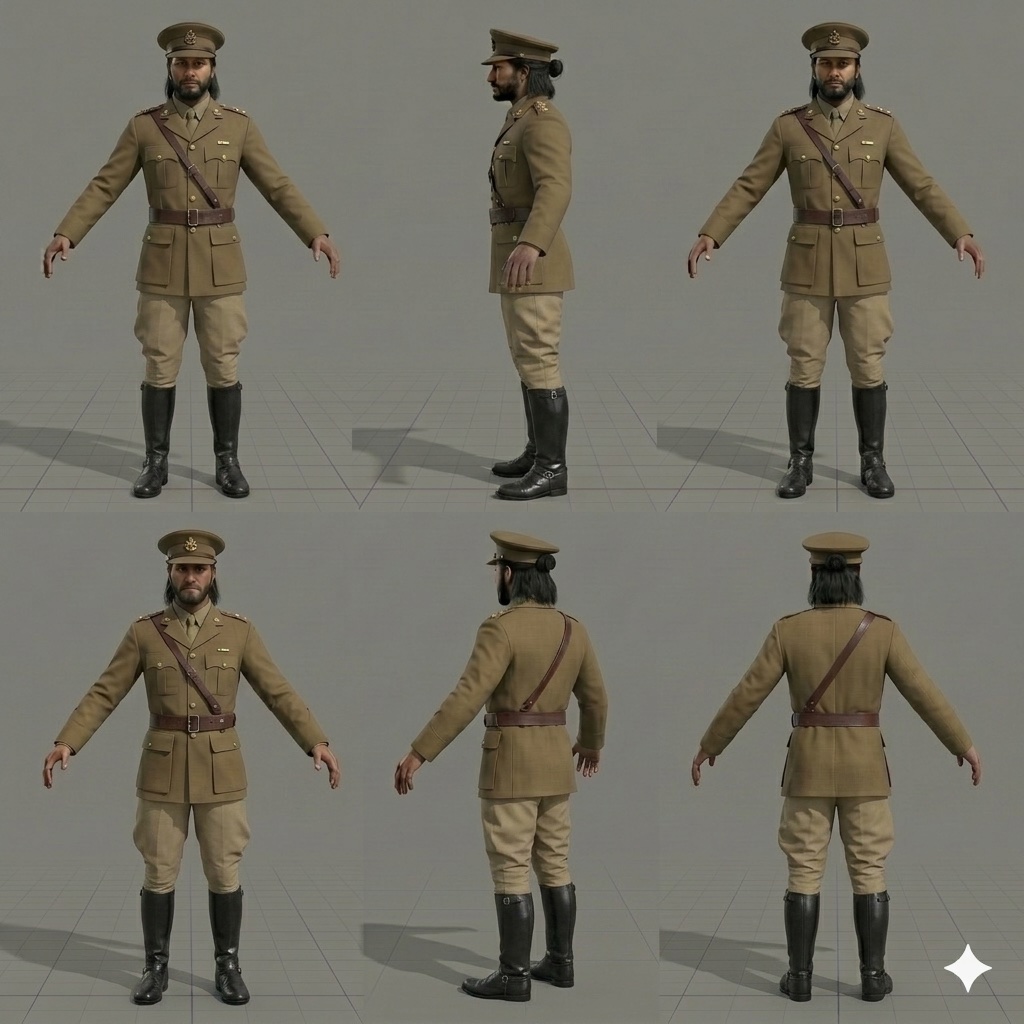
AI-generated · concept phase · historically inspired, not documentary reconstruction.
AI-generated racing trailer study · concept phase
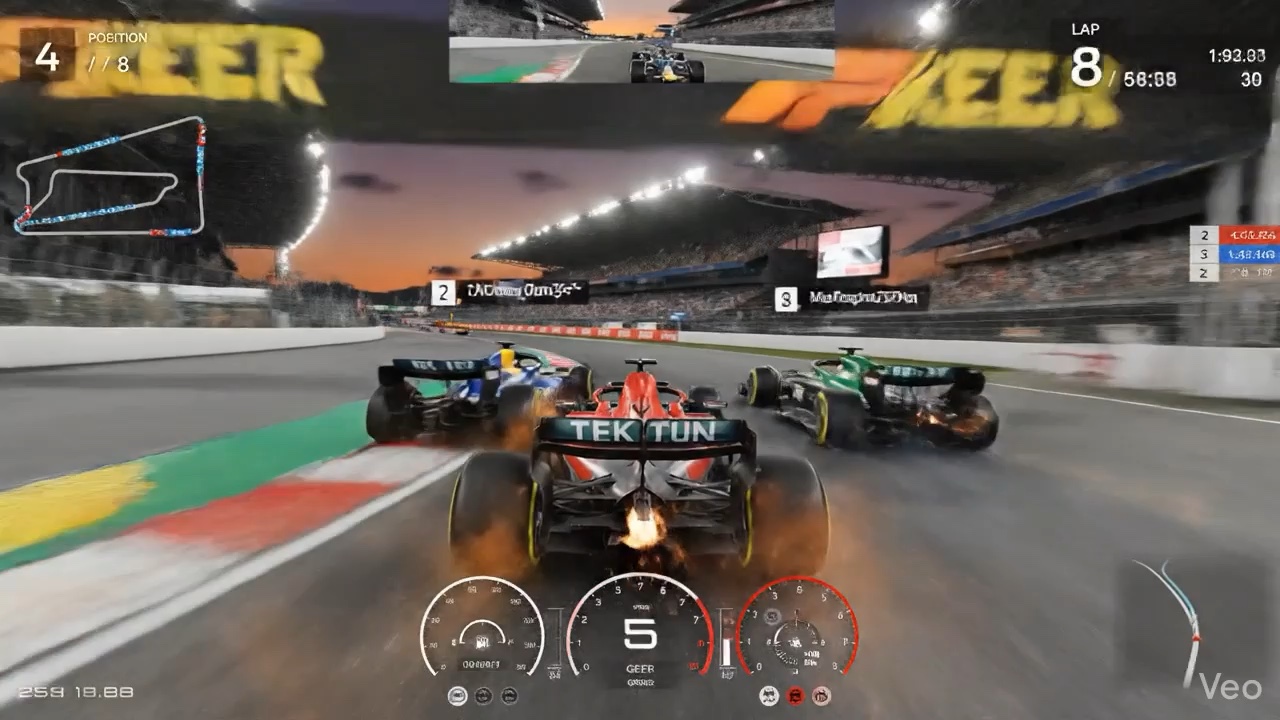
This racing sequence tests speed through camera height, compressed perspective, environmental streaking, and edit rhythm. A controlled still establishes the vehicle, route, lighting, and focal direction before motion is introduced. The complete supplied pass is shown below without trimming.
World targets + reviewed motion
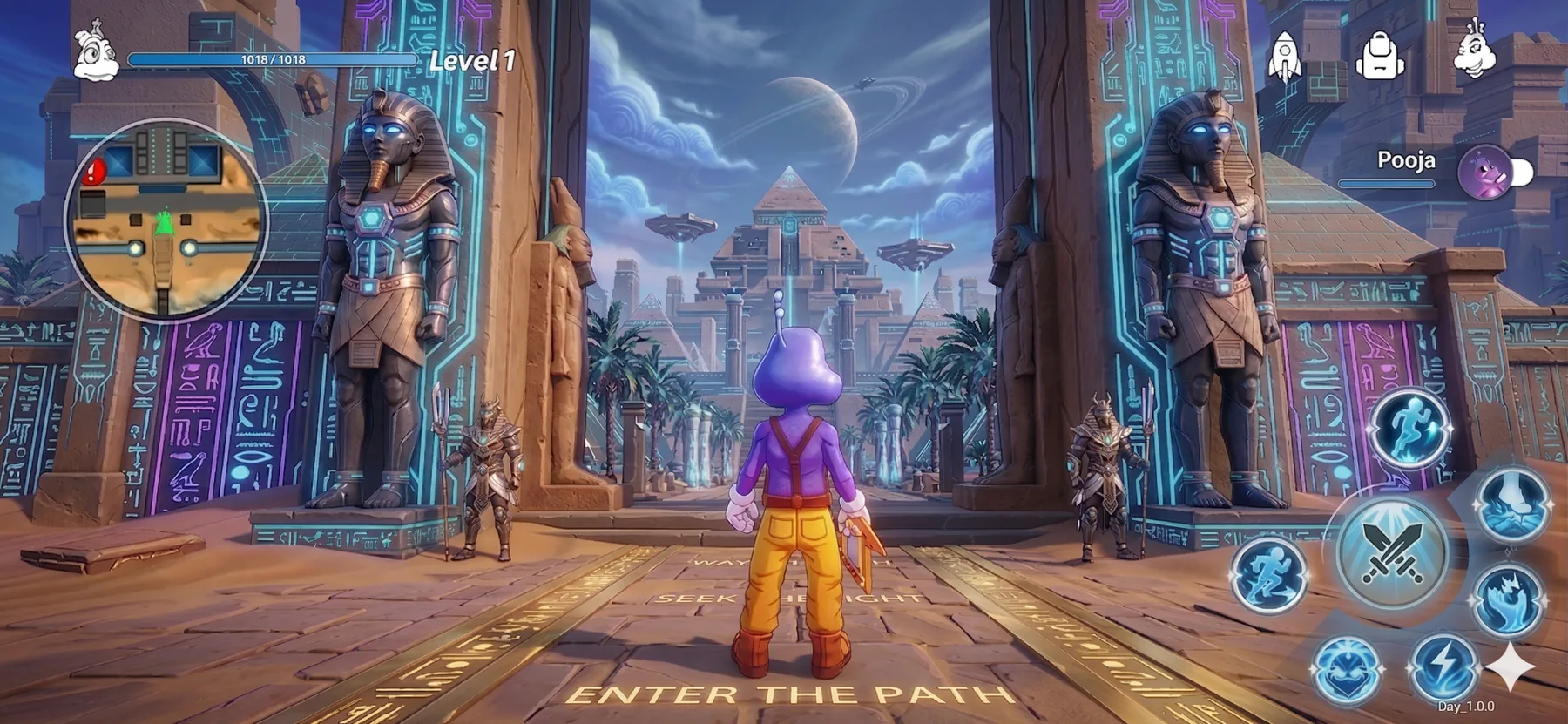
World frames resolve atmosphere, landmark hierarchy, and player scale before motion begins. Short video passes then test camera intent, action cadence, and continuity; only the strongest stable ranges move into the final edit.
Frame to frame · continuation workflow
An approved still enters an image-to-video pass; the strongest stable final frame becomes the next opening frame. Each continuation is accepted only when silhouette, subject identity, lighting, and camera axis hold. The finished sequence is trimmed and assembled rather than accepted as one uncontrolled generation.
Controlled keyframe
Composition, subject scale, silhouette, palette, lighting direction, and negative space are resolved before motion is introduced. Variants are compared as stills so a weak visual target is not carried forward.
Review gate
Is the frame strong enough to communicate the shot before anything moves?
Output
An approved first frame and a concise motion brief.
Motion test
The approved still becomes the opening frame for LTX or Hailuo passes. Camera path, subject action, pace, and duration are defined separately. Short passes are compared for camera stability, silhouette retention, material continuity, and useful movement.
Review gate
Does the movement strengthen the composition without introducing visible drift?
Output
A selected segment with a stable opening and ending range.
Continuity handoff
The strongest final frame is extracted and used as the next opening condition. Continuation proceeds only when subject form, lighting direction, camera axis, and visual stability can support another pass. Unstable endings are discarded.
Review gate
Can the final frame continue without changing identity, direction, or lighting logic?
Output
Overlapping motion segments with compatible transition frames.
Sequence edit
The strongest ranges are trimmed and joined where camera and subject motion already agree. Unstable openings and endings are removed, then timing, exposure, color, and cadence are reviewed across the complete sequence.
Review gate
Does the assembled sequence feel intentional from first frame to last?
Output
A concise concept-motion study ready for review or production reference.
Repeatable pipeline
ComfyUI graphs and custom nodes organize input preparation, generation settings, frame extraction, continuation handoff, version naming, and output. Shot parameters remain visible so a successful pass can be repeated or one variable can be revised without rebuilding the workflow.
Review gate
Can the shot be repeated, revised, and handed off without losing its visual logic?
Output
A documented node graph with organized stills, passes, continuation frames, and final edits.
Workflow tools
LTX and Hailuo support comparative image-to-video passes. ComfyUI organizes the custom-node handoff, frame extraction, visible settings, and output versions.
Comparable motion passes from an approved still.
Alternate camera and subject-motion tests against the same target.
Graph-based control for nodes, frame handoff, versioning, and repeatable output.
Outcome
AI-generated game visual development
Clearly disclosed worlds, characters, and motion studies that can be reviewed, compared, extended, and translated into stronger production guidance.