
Case study 03

Battlefleet Armageddon

Read the fleet before the plating.

Role
Art Director · Lead 3D Artist
Project
Science-fiction strategy game for mobile
Engine
Unity
Focus
Macro-readability · hard-surface standards · fleet consistency · triangle reduction
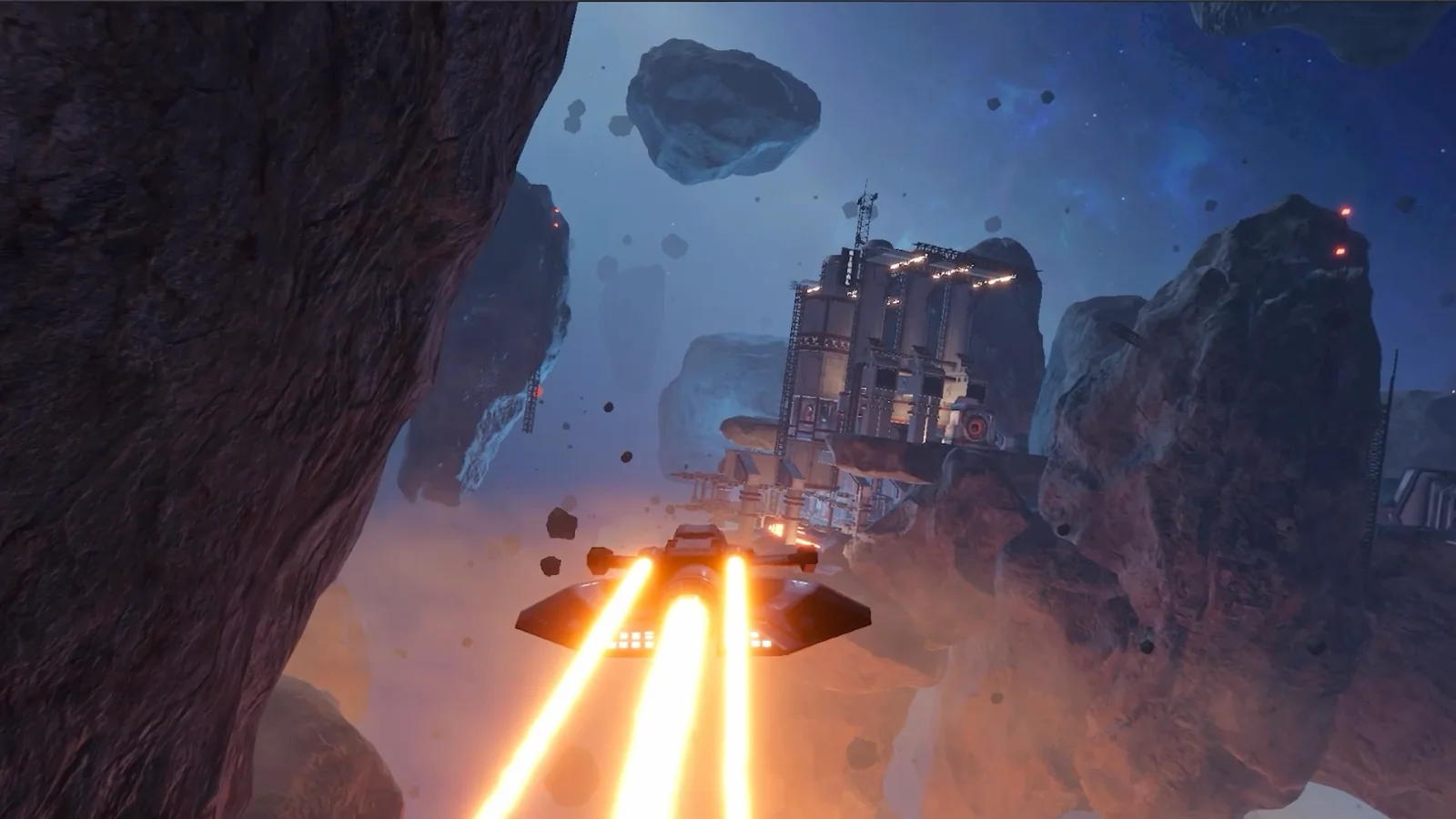
Final Battlefleet gameplay frame showing a ship flying through an asteroid field toward a station

Final output · full view

Final output
Final in-engine world · mobile strategy
01

Creative + technical goal

The Mandate

Build a fleet language around silhouette and large value groups, establish repeatable hard-surface standards, and protect fidelity while cutting geometry nearly in half.

Project premise

Ships had to communicate class, scale, faction, and tactical presence from a zoomed-out strategy view where small surface details disappear. The gameplay camera became the principal approval camera.

The challenge

Traditional hard-surface detail could consume geometry without improving recognition. The fleet also needed standards that artists and vendors could repeat across many assets under a strict mobile budget.

02

Reference + composition

Reference & Ideation

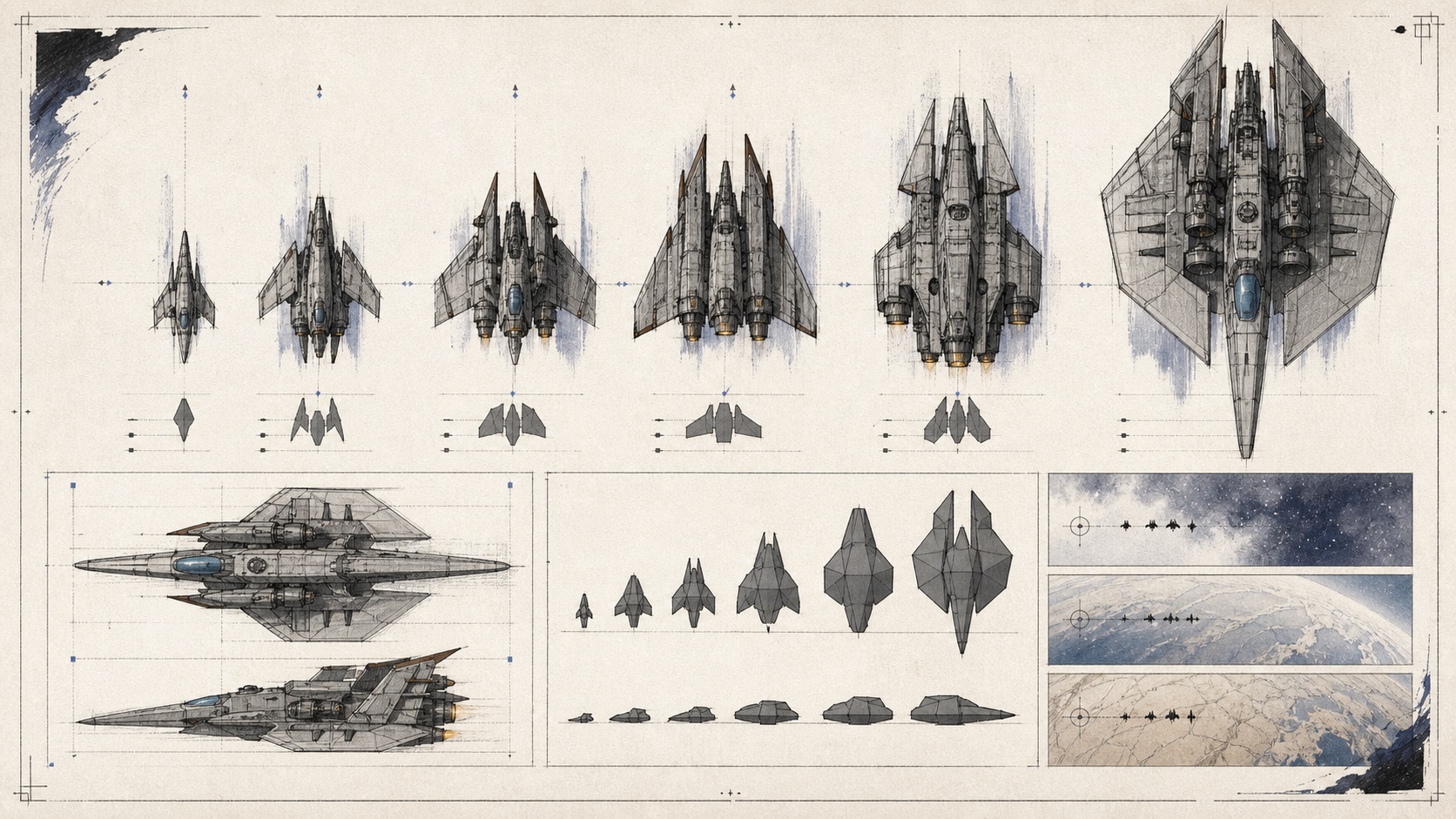
The reference set focused on proportion, fleet spacing, atmospheric restraint, and recognition at distance. Capital-ship massing, formation hierarchy, cockpit-scale orientation, and quiet space fields were all evaluated against the strategy camera. Pencil silhouettes then tested length, width, directional emphasis, and engine grouping before detail entered the design.

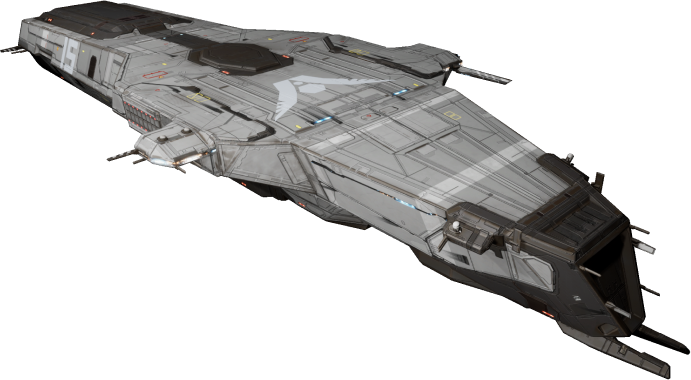
Official Homeworld 3 capital ship render with a clear travel axis and broad hull planes

A clear travel axis, broad hull planes, and sparse protrusions establish the class before panel detail.

Capital-ship language
A clear travel axis, broad hull planes, and sparse protrusions establish the class before panel detail.
Official Homeworld 3 deep navy space field with a restrained cloud band

A clear travel axis, broad hull planes, and sparse protrusions establish the class before panel detail.

Atmospheric restraint
A restrained navy field creates scale and depth without competing with ship silhouettes or propulsion.
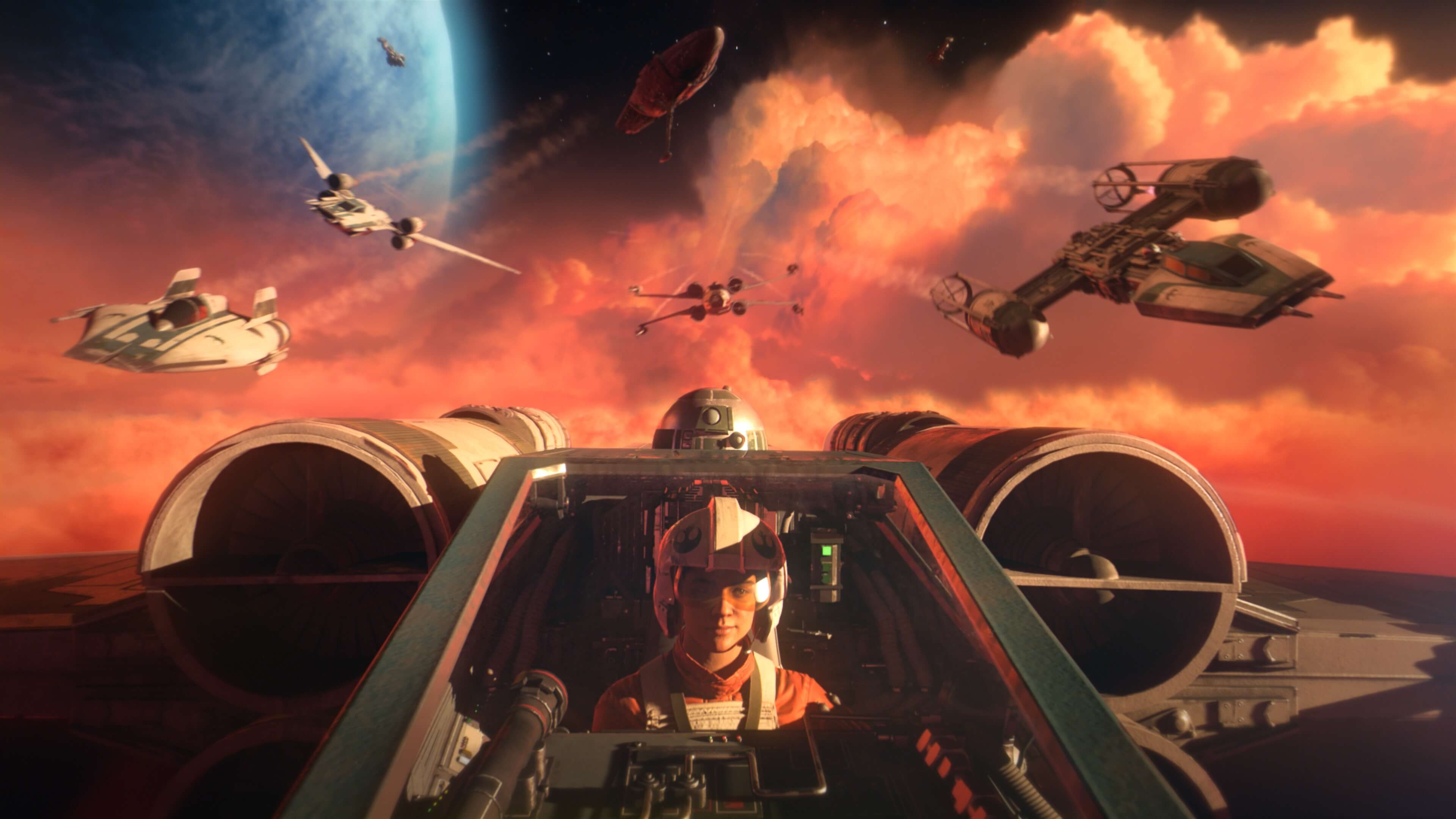
Official Star Wars Squadrons cockpit view with a readable flight axis and distant formation

A clear travel axis, broad hull planes, and sparse protrusions establish the class before panel detail.

Flight orientation
A strong horizon, clear travel vector, and limited high-intensity accents keep orientation immediate during movement.
AI-generated concept-phase graphite study of a science-fiction fleet silhouette system and zoom-distance tests

AI-generated · concept phase · full view

AI-generated · concept phase
AI-generated for this portfolio case study to communicate concept-phase hierarchy, fleet scale, and macro-readability decisions; not shipped artwork.
03

Reference → target → final

Color & Lighting Script

The color script protects the strategy-camera read. A quiet space field holds the background, grouped slate values define hull mass, a broad cool key reveals major planes, and warm propulsion provides the clearest directional accent.

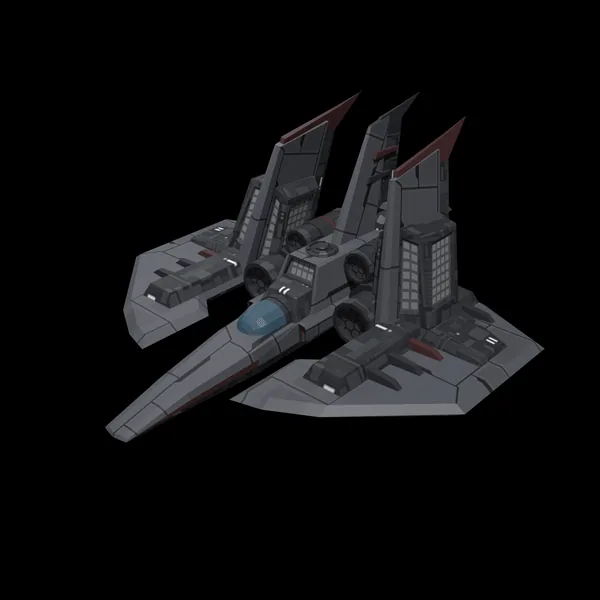
Battlefleet capital ship turntable frame showing hard-surface value grouping

Final asset · material response · full view

Final asset · material response
Material discipline: one atlased texture family carries painted panels, edge wear, and specular separation. Normal detail is concentrated on planes that survive the strategy camera.

Portfolio color-direction analysis

Battlefleet Armageddon

  1. Key light

    Ion blue

    #6BB2D4
    Usage
    Support · major planes
    Purpose
    A broad cool key reveals class-defining planes without fragmenting the hull.
  2. Midtone

    Fleet slate

    #667887
    Usage
    Dominant · hull grouping
    Purpose
    Grouped slate values carry faction and class identity at strategy-camera distance.
  3. Shadow

    Void

    #0E1218
    Usage
    Dominant · tactical field
    Purpose
    A quiet dark field preserves the fleet silhouette and reduces background competition.
  4. Material / local

    Gunmetal

    #39434C
    Usage
    Support · hard surface
    Purpose
    Gunmetal binds large surfaces while texture carries repeatable plating information.
  5. Atmosphere

    Nebula blue

    #2B3C5A
    Usage
    Support · depth field
    Purpose
    Restrained atmosphere separates asteroid, station, and fleet depth without stealing contrast.
  6. Accent

    Engine amber

    #F08A3E
    Usage
    Reserved · propulsion
    Purpose
    Warm propulsion establishes direction; warning red remains secondary and tactical.
04

Mood + visual target

AI-Assisted Concepting

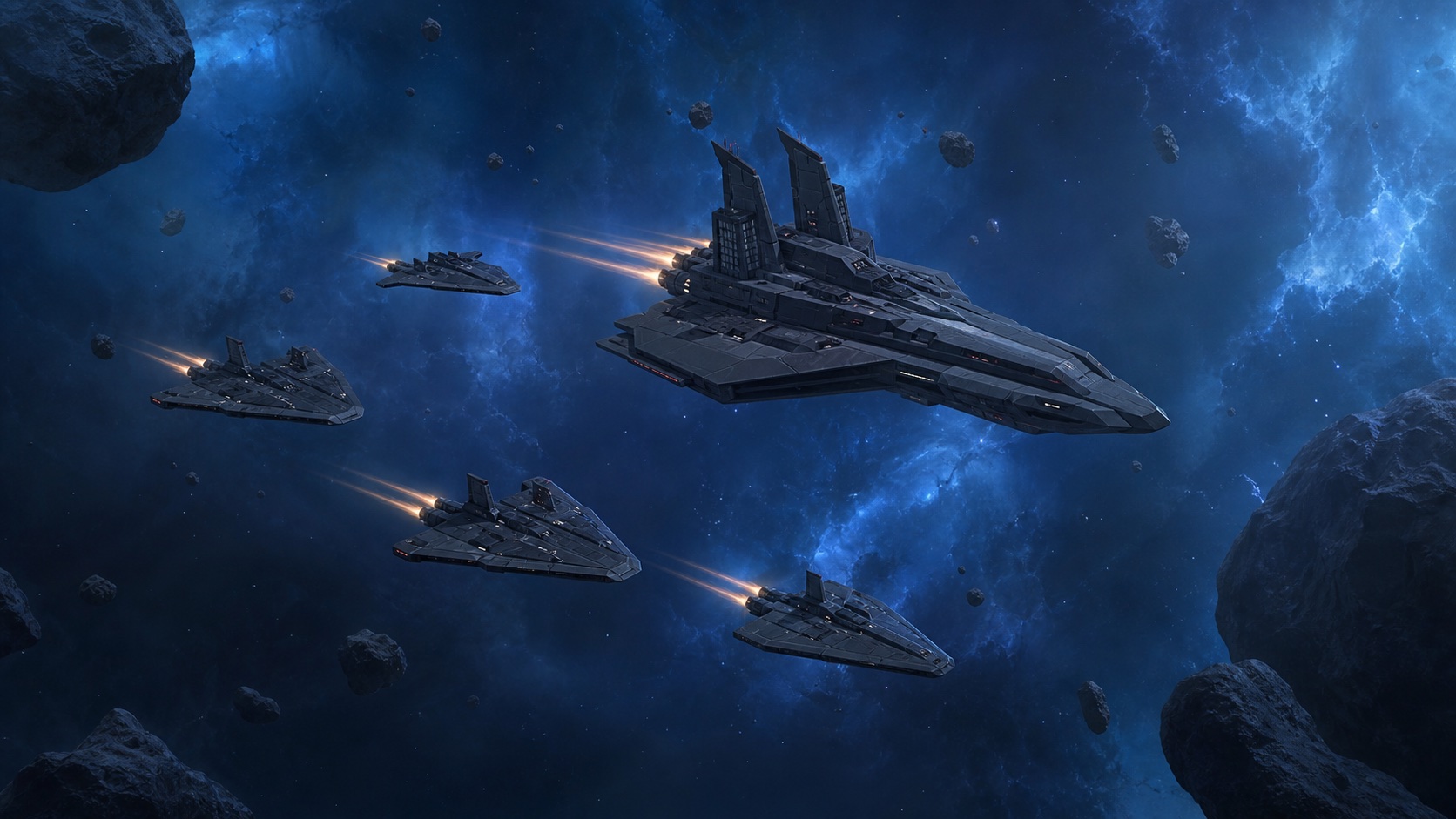
AI-generated concept-phase image of a readable fleet formation against a restrained blue nebula

AI-generated · concept phase · full view

AI-generated · concept phase
AI-generated for this portfolio case study to illustrate concept-phase tests of fleet silhouette, restrained space values, broad hull lighting, and propulsion accents; not shipped artwork.

“Explore broadly. Translate selectively. Author the final decision in engine.”

I set the faction mood, macro-form requirements, and strategy-camera read before broad exploration. Leonardo and Stable Diffusion helped compare lighting and surface-language possibilities; ChatGPT and Claude helped structure research, storyboard beats, pre-production notes, and optimization criteria. Useful ideas were translated into authored silhouette rules, proportion standards, and value groups.

  • Leonardo
  • Stable Diffusion
  • ChatGPT
  • Claude
05

Team + pipeline

Production Leadership

01

Art-team direction

I established primary, secondary, and tertiary form priorities. Artists and vendors received silhouette references, proportion guidance, value-grouping targets, and geometry expectations, so optimization became a shared visual responsibility rather than a late technical correction.
02

Team-scale adaptability

Visual targets, proportion references, review priorities, and acceptance criteria give on-site or distributed artists and external vendors a reliable path from first submission to approved asset, regardless of team size.

03

Technical alignment

Performance constraints were translated into visible art rules so the art team could protect the intended read while making efficient production decisions.

06

Engine + performance

Final Engine Execution & Optimization

Final engine execution

Final assets were judged as fleets, not isolated ships. Spacing, scale hierarchy, orientation, lighting response, and faction contrast were reviewed together. Trim sheets and atlasing kept the hard-surface vocabulary consistent while geometry stayed focused on class-defining forms.

Optimization

I directed the art team to reduce ship triangle counts from 2.5K to 1.2K. Primary silhouette and faction structures were protected first; low-impact geometry was simplified and repeatable surface information moved into textures. Every reduction was judged visually at strategy-camera distance.

Complete project trailer · fleet, station, and asteroid-field readability in motionUser-controlled playback · sound available
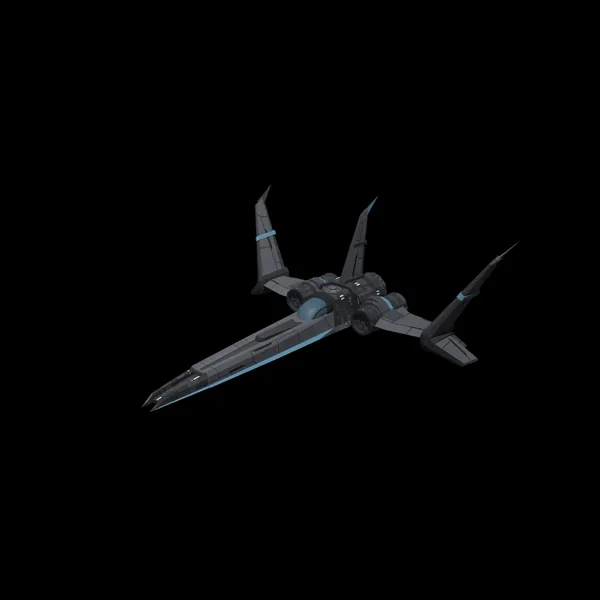
Fighter turntable showing the readable low-poly ship silhouette

Fighter craft · directional read at small scale

Outcome

2.5K → 1.2K

Triangles per ship, with the gameplay read protected

Triangle counts reduced from 2.5K to 1.2K while preserving fleet identity, silhouette, and gameplay-scale fidelity.