Case study 02

Mayhem: Alien Worlds

A readable battlefield wrapped in controlled spectacle.

Role
Art Director · Lead 3D Artist
Project
Modular science-fiction world for mobile
Engine
Unity URP
Focus
Combat readability · modular kits · destructible planning · LOD strategy
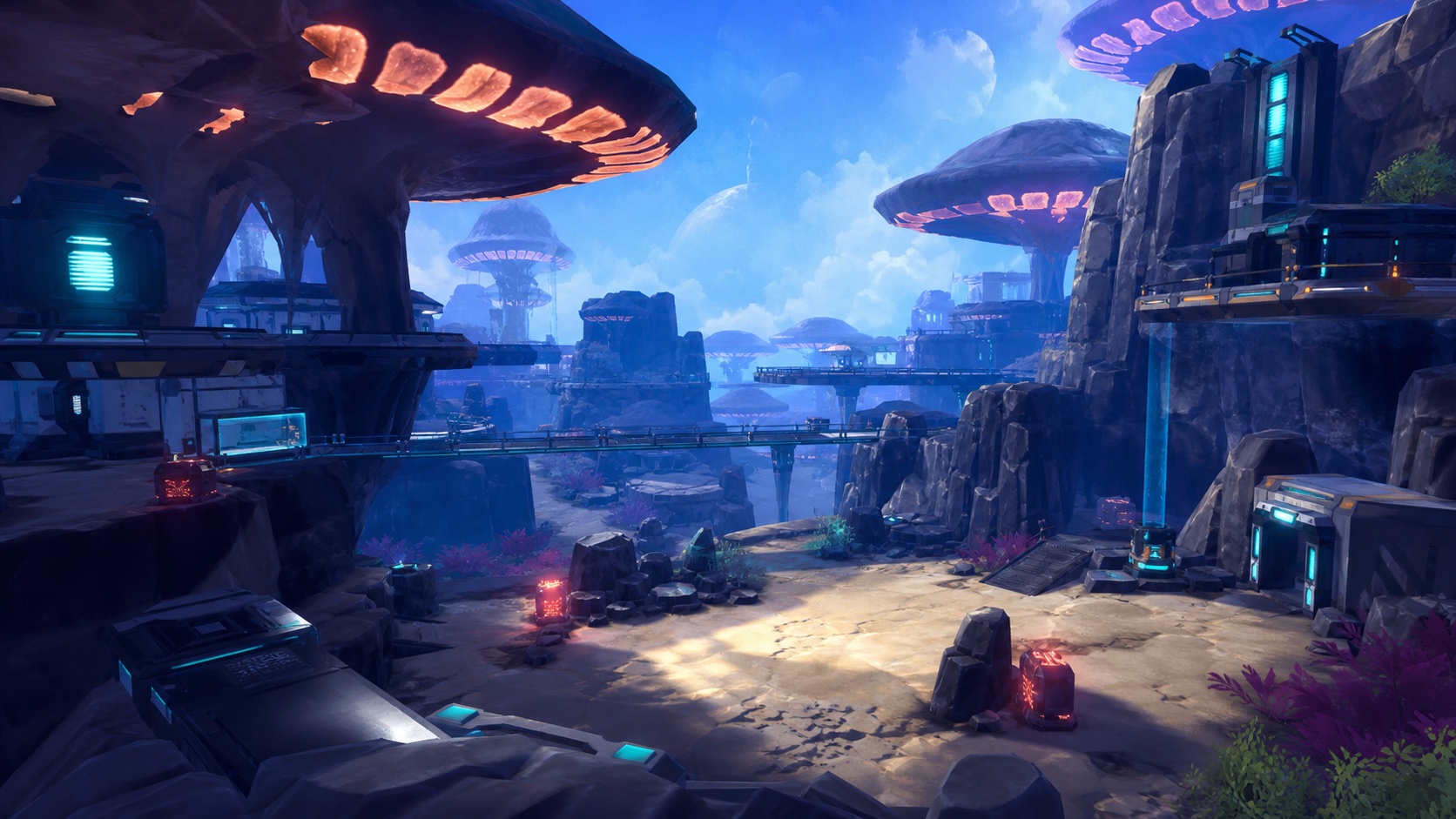
Final Mayhem alien world in Unity with giant mushroom forms, cliffs, and modular bridges

Final output · full view

Final output
Final in-engine environment · Unity URP
01

Creative + technical goal

The Mandate

Create a bold alien biome with high-contrast combat reads, define destructible and static asset families early, and turn the visual language into a reusable mobile-ready kit.

Project premise

The world needed to feel energetic and unfamiliar while terrain, cover, threats, and traversal remained instantly readable on a mobile screen. Spectacle could support play, but never obscure it.

The challenge

Alien geology, modular structures, emissive materials, effects, and destructible objects all competed for attention. Production also needed enough reuse to build multiple spaces without flattening their identity.
02

Reference + composition

Reference & Ideation

References were selected for broad terrain massing, readable horizons, modular rhythm, and controlled color zoning. Each source answered a production question: how a landmark organizes travel, how an industrial kit stays distinct from alien geology, and how large terrain bands remain legible before surface detail. Pencil thumbnails and blockouts then tested those principles at gameplay scale.

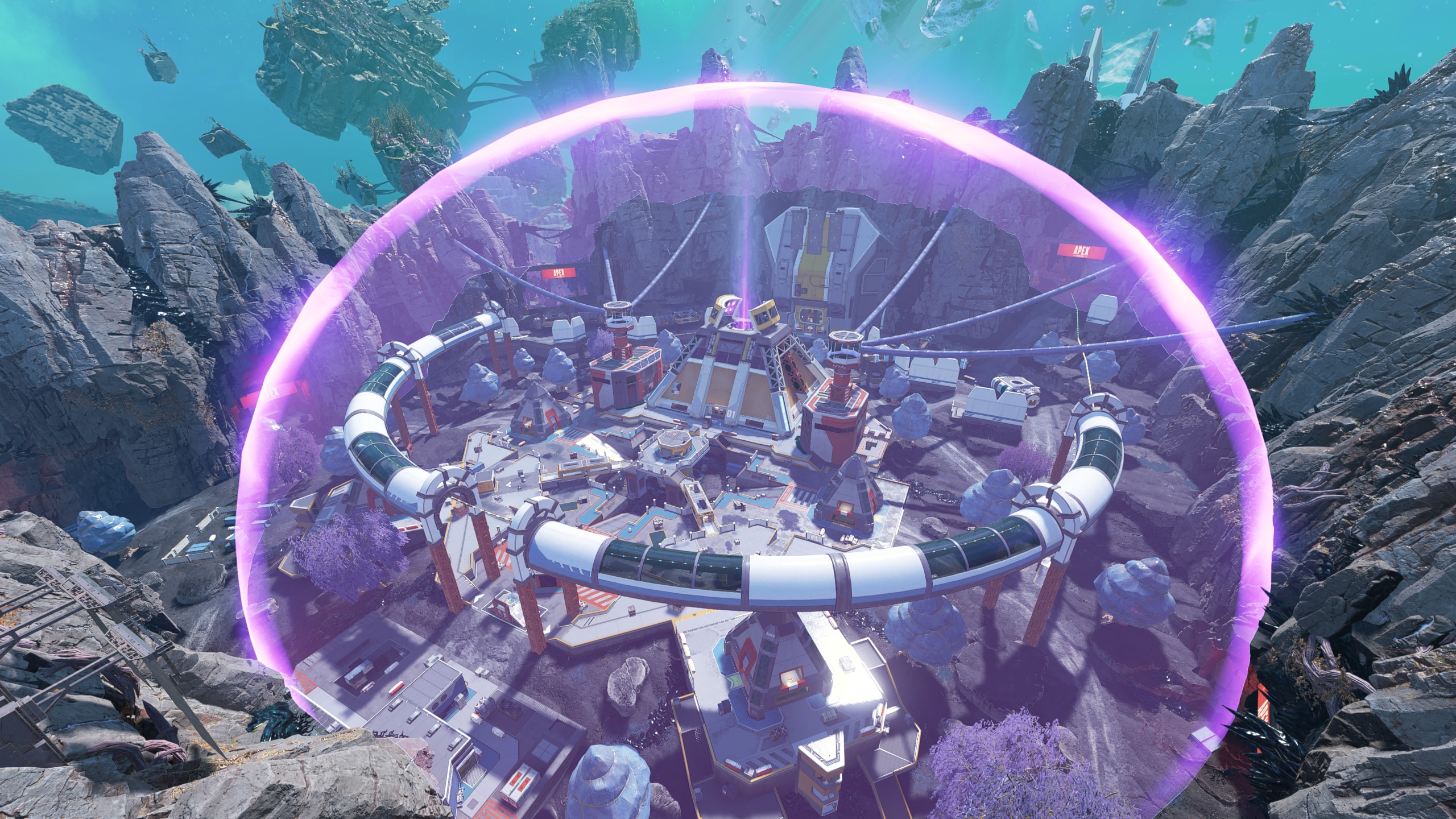
Apex Legends Quarantine Zone with a singular circular landmark, radial paths, and high-contrast hazard color

One dominant landmark, radial travel lanes, and a single hazard color separate navigation, cover, and threat from the rock field.

Landmark + combat lanes
One dominant landmark, radial travel lanes, and a single hazard color separate navigation, cover, and threat from the rock field.
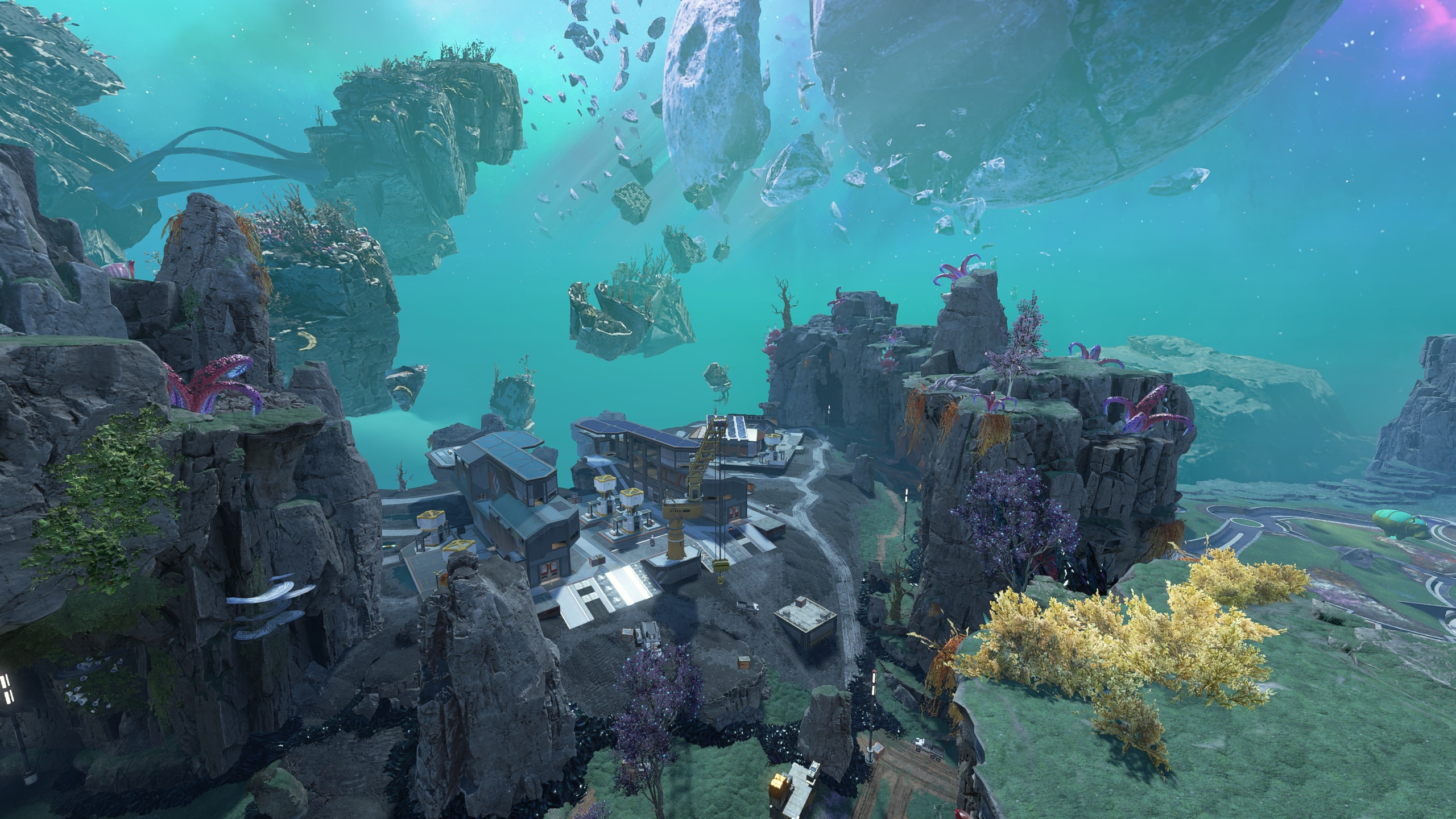
Apex Legends Breaker Wharf showing modular industrial structures against monumental alien cliffs

One dominant landmark, radial travel lanes, and a single hazard color separate navigation, cover, and threat from the rock field.

Kit + geology
An industrial kit reads as one family against broad rock masses; vegetation accents remain secondary to routes and structures.
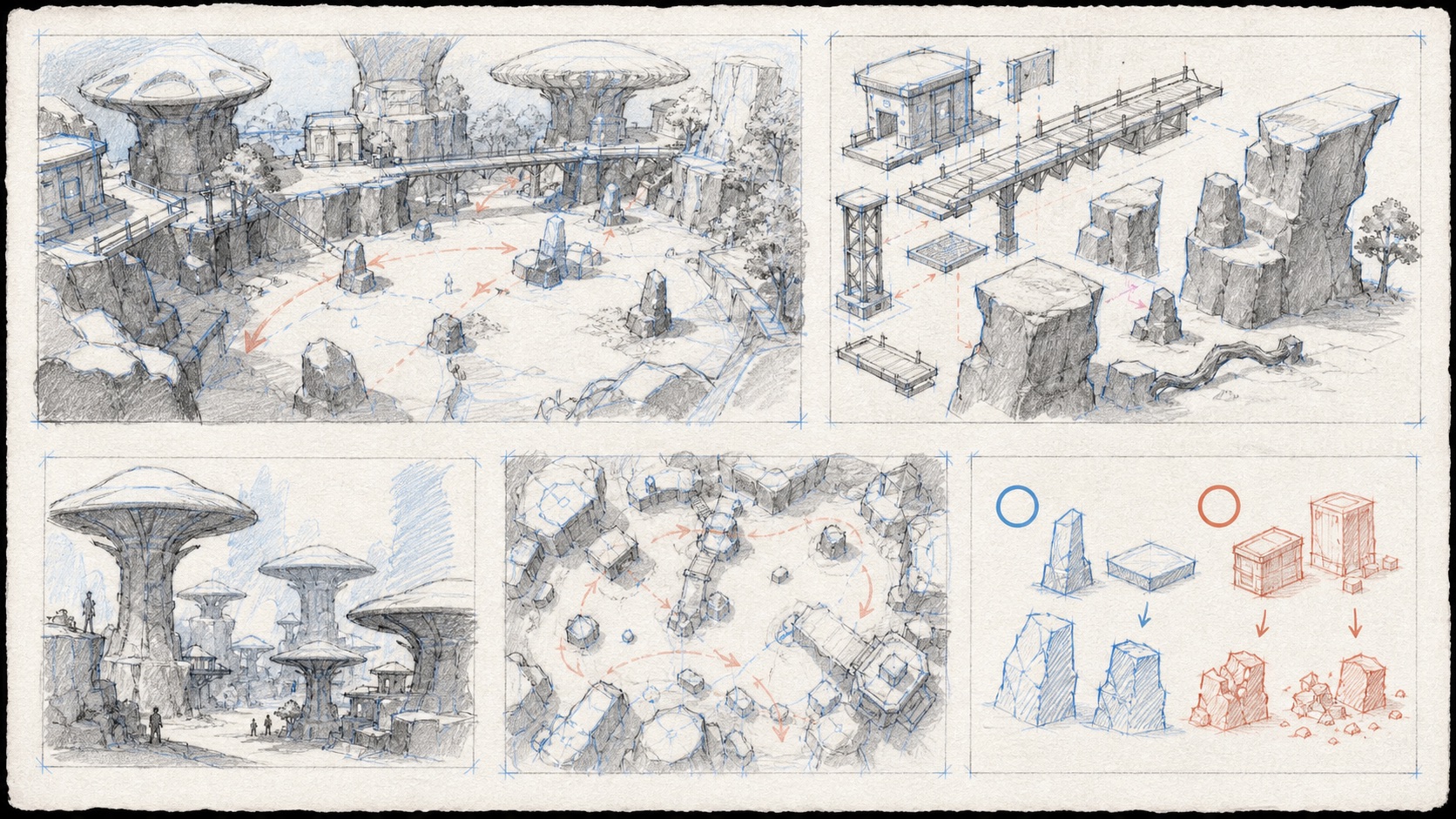
AI-generated concept-phase graphite and blue-pencil study of an alien combat arena, modular kit, and destructible key

AI-generated · concept phase · full view

AI-generated · concept phase
AI-generated for this portfolio case study to communicate concept-phase combat flow, modularity, and destructible-versus-static asset decisions; not shipped artwork.
03

Reference → target → final

Color & Lighting Script

The palette assigns gameplay function. Dark ground stabilizes combat, cyan supports orientation, coral identifies danger or destructibility, and magenta remains part of the biome rather than an interaction cue.

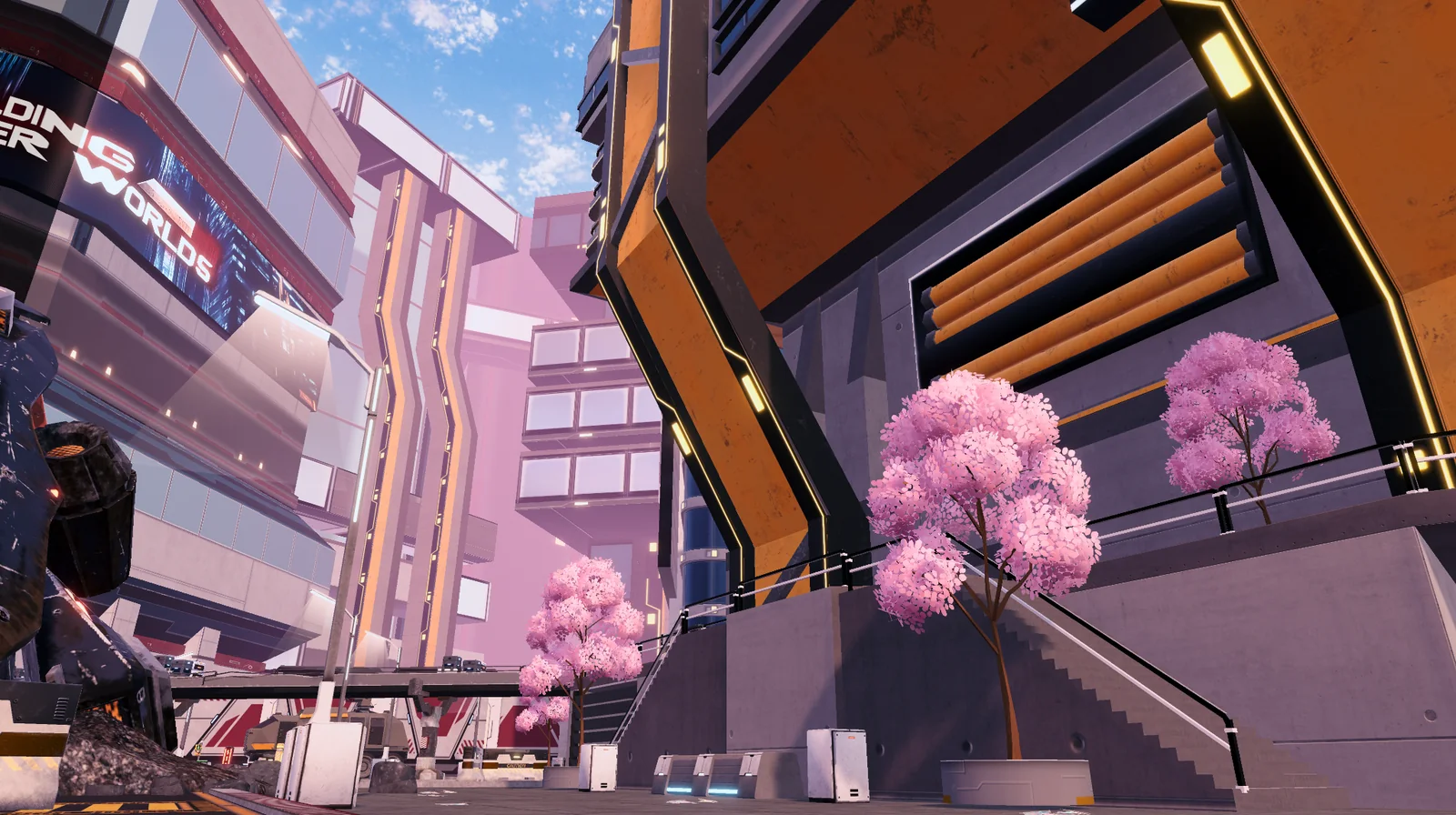
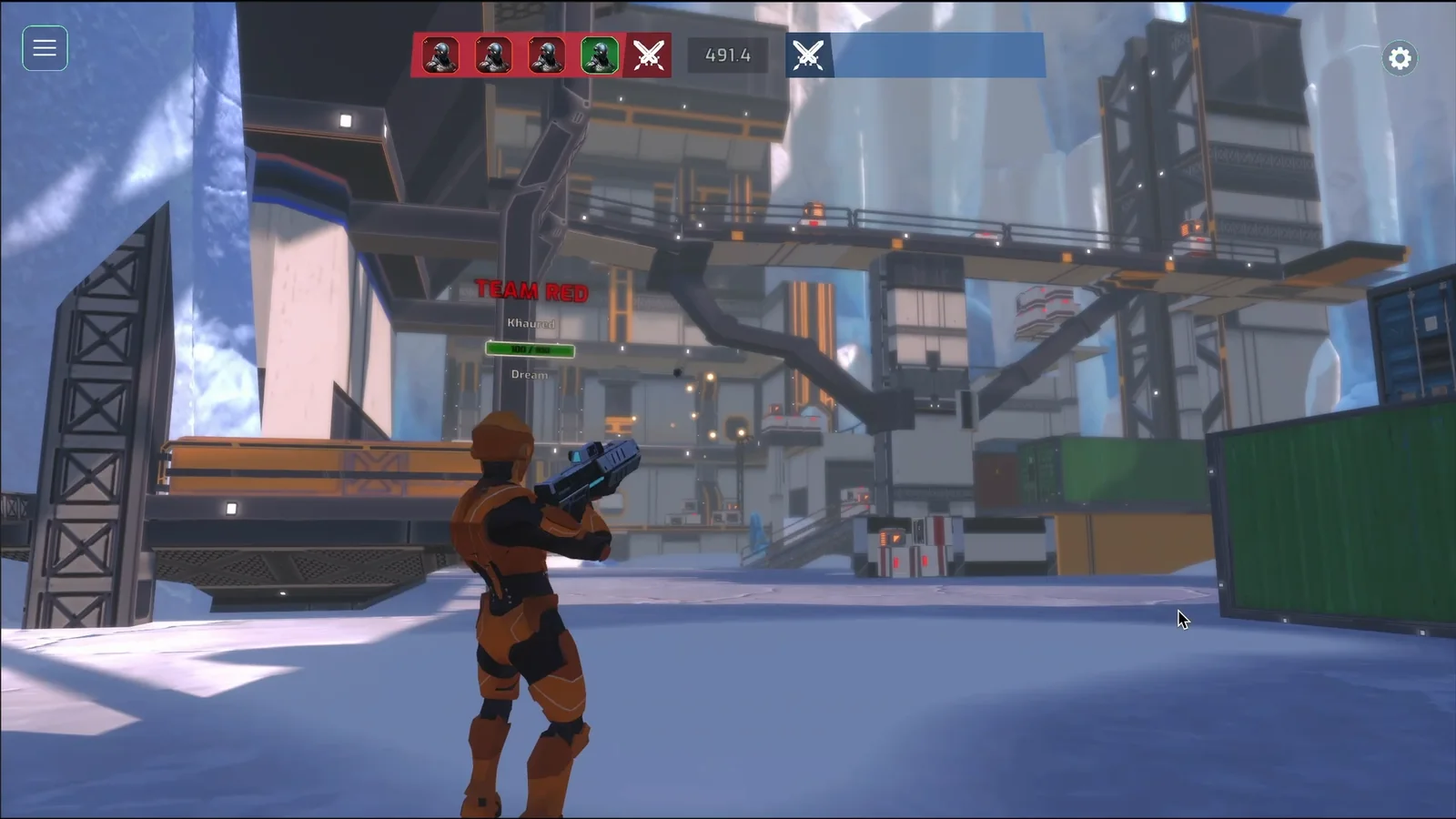
Final Mayhem city environment showing modular architecture and warm landmark accents

Material hierarchy: hand-painted base color establishes the graphic read; trim-sheet metals unify the modular kit; warm emissive and painted orange accents identify navigable structures.

Final frame · material hierarchy
Material hierarchy: hand-painted base color establishes the graphic read; trim-sheet metals unify the modular kit; warm emissive and painted orange accents identify navigable structures.
Mayhem process frame showing combat-space cover, routes, and modular-kit readability

Material hierarchy: hand-painted base color establishes the graphic read; trim-sheet metals unify the modular kit; warm emissive and painted orange accents identify navigable structures.

Final frame · value structure
Gameplay read: darker ground anchors combat, pale structural planes hold the midtone, cyan supports orientation, and coral remains reserved for hazards or destructible elements.

Portfolio color-direction analysis

Mayhem: Alien Worlds

  1. Key light

    Combat cyan

    #53C5D9
    Usage
    Reserved · orientation
    Purpose
    Cyan identifies landmarks and reinforces the direction of travel.
  2. Midtone

    Biome green

    #6F8D72
    Usage
    Dominant · organic field
    Purpose
    A broad organic family gives the world identity without competing with combat cues.
  3. Shadow

    Space navy

    #182A46
    Usage
    Dominant · stable ground
    Purpose
    Deep blue anchors traversal, cover, and player silhouettes on a small screen.
  4. Material / local

    Alien magenta

    #D98DBA
    Usage
    Support · biome identity
    Purpose
    Magenta belongs to flora and local materials, never to interaction status.
  5. Atmosphere

    Sky periwinkle

    #9EB6D9
    Usage
    Support · distance
    Purpose
    A light atmospheric band separates terrain layers and protects the horizon read.
  6. Accent

    Hazard coral

    #F06448
    Usage
    Reserved · danger
    Purpose
    Coral is held for destructible, dangerous, or immediately actionable elements.
04

Mood + visual target

AI-Assisted Concepting

AI-generated concept-phase image of a readable blue alien arena with mushroom canopies and coral destructible accents

AI-generated · concept phase · full view

AI-generated · concept phase
AI-generated for this portfolio case study to illustrate concept-phase tests of biome contrast, landmark color, destructible cues, and combat-scale separation; not shipped artwork.

“Explore broadly. Translate selectively. Author the final decision in engine.”

I established the biome logic, combat-readability goals, and modular shape language before expanding the search. Leonardo and Stable Diffusion helped compare material, lighting, and emissive possibilities; ChatGPT and Claude helped structure research, storyboard beats, production questions, and concise guidance. The useful results were translated into authored palette boundaries, material families, contrast priorities, and kit rules.

  • Leonardo
  • Stable Diffusion
  • ChatGPT
  • Claude
05

Team + pipeline

Production Leadership

01

Art-team direction

I organized the art team around structural pieces, terrain, props, destructible assets, and landmarks. Shared dimensions and assembly rules reduced ambiguity, while reviews evaluated assets in context and at gameplay scale rather than only in close presentation views.

02

Team-scale adaptability

Visual targets, proportion references, review priorities, and acceptance criteria give on-site or distributed artists and external vendors a reliable path from first submission to approved asset, regardless of team size.

03

Technical alignment

Performance constraints were translated into visible art rules so the art team could protect the intended read while making efficient production decisions.

06

Engine + performance

Final Engine Execution & Optimization

Final engine execution

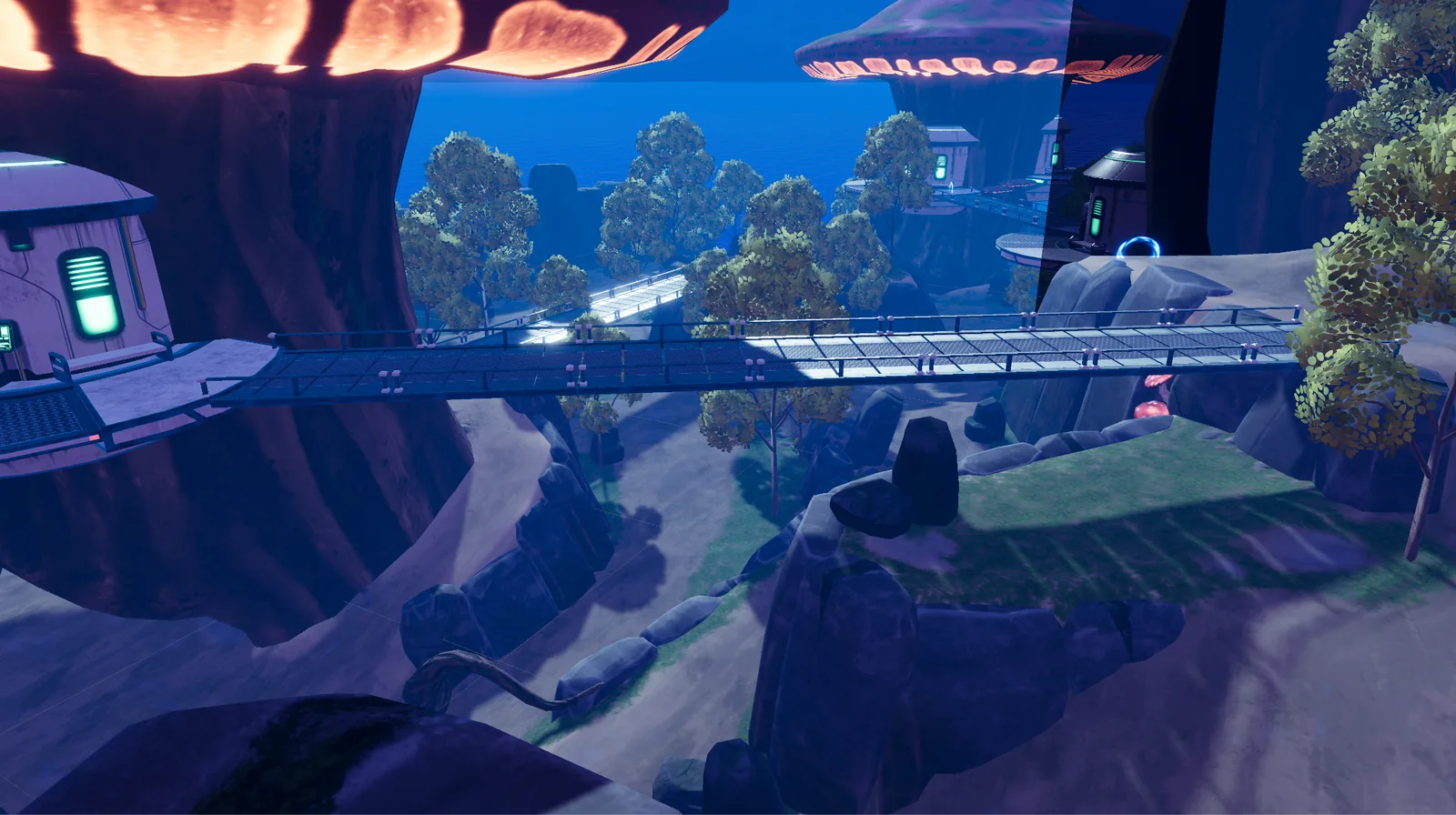
The final world was assembled in Unity URP from reusable modular kits. Static pieces framed combat and orientation; destructible pieces received stronger interaction cues without breaking the larger environment language.

Optimization

LODs protected the silhouettes that mattered as distance increased. Trim sheets and atlasing reduced material overhead, and geometry reviews placed detail where it changed gameplay-scale perception. The same discipline improved both frame performance and combat clarity.

Complete project showcase · alien-world environments, traversal spaces, and work-in-progress contextUser-controlled playback · sound available

Outcome

Static ↔ Destructible

Asset language defined before production

Distinctive alien worlds, readable combat spaces, and a modular art system designed for mobile performance.